NEWS
Ana Luísa Rodrigues Machado Receives OERN Merit Award
6 July 2026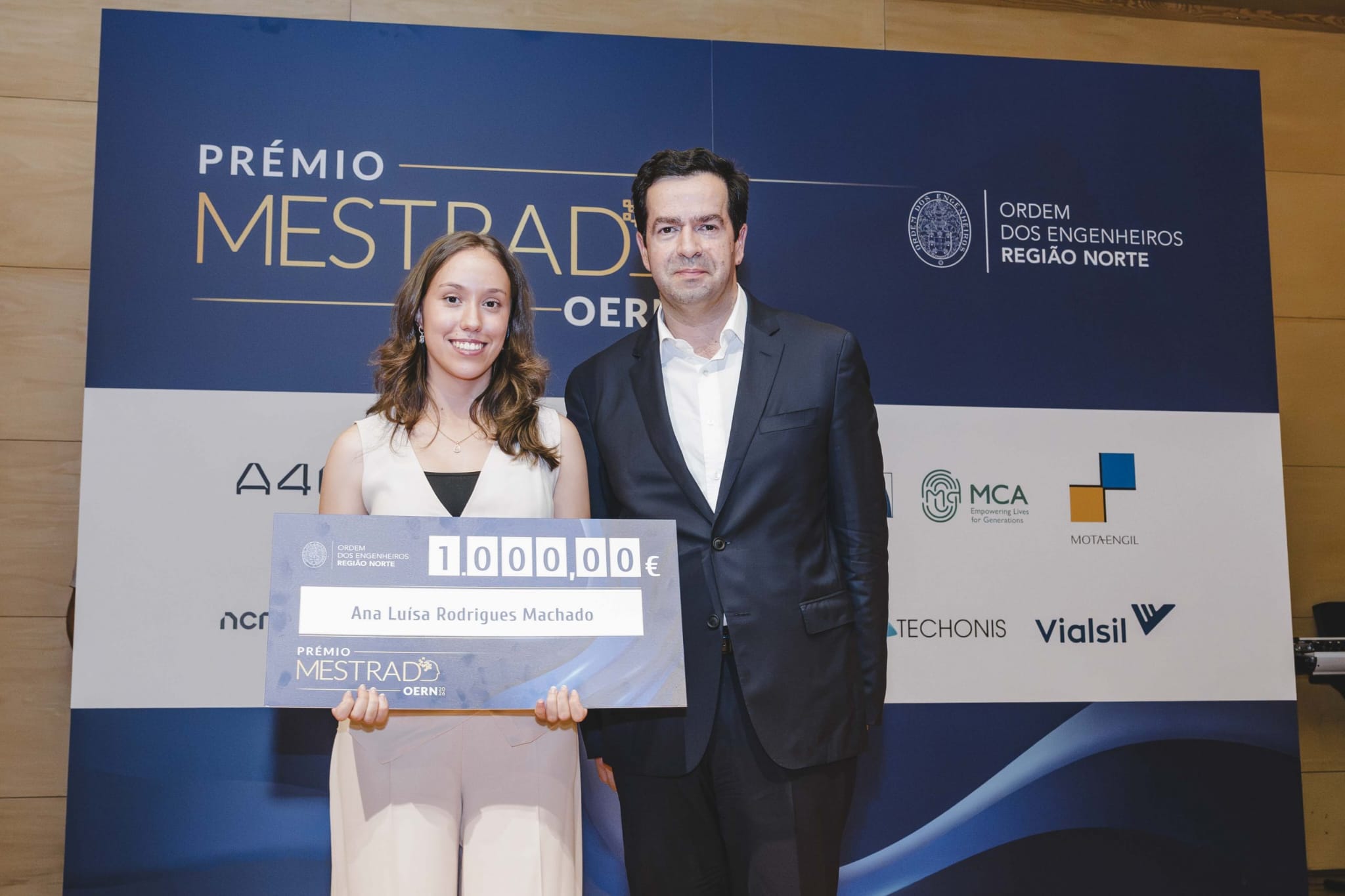
Ana Luísa Rodrigues Machado, a Master's student in Chemical and Biological Engineering carrying out her dissertation at LSRE-LCM and a research fellow under the LIGHT2H2O project, has been awarded a Merit Award by the Northern Regional Branch of the Portuguese Order of Engineers (OERN) as part of the 2nd Edition of the OERN Master's Awards.
Ana Luísa is conducting her Master's dissertation entitled "A Multimodal Machine Learning Framework for Photocatalyst Design in Hydrogen Production", under the supervision of Maria José Sampaio, Cláudia Gomes da Silva, and Idelfonso Nogueira (NTNU).
More info: https://www.oern.pt/noticias/oern-distingue-52-estudantes-na-2-a-edicao-dos-premios-de-mestrado/
Successful PhD Defense bridges research and Industrial innovation
3 July 2026


LSRE-LCM congratulates Ludovic Ascenção on his successful PhD defense. Ludovic completed the Doctoral Program in Mechanical Engineering with the PhD thesis entitled "Hidrodinâmica de um misturador rotor- estator para mistura de soluções aquosas de ureia” (Hydrodynamics of a rotor stator mixer for real aqueous solutions mixing), supervised by Dr Ricardo Santos and Dr Adélio Cavadas.
This study was carried out in colaboration with Navistokes Engineering, a company founded and managed by Ludovic, which produces aqueous urea solutions for NOx emissions reduction.
The staff and team of LSRE-LCM wish Ludovic every success in his professional career and enterprises!
RECENT DEVELOPMENTS
PUBLICATIONS
APPROVED PROJECTS
THESIS DEFENSES
O2/O3 Gas Separation Using Membrane and Adsorption-Based Technologies
Hidrodinâmica de um misturador rotor-estator para mistura de soluções aquosas de ureia
Additive Manufacturing of Structured Adsorbents for Adsorption-based Processes
Catalytic Conversion of Wastes into Aviation Fuel
Valorization of Fish Canning Industry Effluents: Design of Membrane and Adsorption Separation Processes
Anthocyanin-loaded double emulsions for food applications: Color stabilization and emulgels for customized 3D-printing
Lignin-based Pickering Stabilizers for Innovative Cosmetic Applications
CFD modeling and simulation of a membrane contactor for ozonation: hydrodynamics, gas-liquid mass transfer and scale-up study
 Faculdade de Engenharia da Universidade do Porto
 (+351) 225 081 669